Introduction
If your cat has turned the sofa, curtains or wooden furniture into a personal scratching station, you are not alone. Scratching is a completely normal feline behaviour, but it can become frustrating when your furniture becomes the preferred target. The good news is that you do not need to punish your cat or accept damaged upholstery. The key is to understand why cats scratch and make an appropriate alternative more appealing.
Learning how to stop cats from scratching furniture starts with setting up scratching posts correctly. Simply buying a post and placing it in an unused corner is often not enough. Cats have individual preferences for height, texture, stability and location, so the setup needs to match the way your cat naturally scratches.
A successful approach combines the right scratching equipment, strategic placement and positive reinforcement. Once the scratching post becomes more convenient and satisfying than the sofa, protecting your furniture becomes much easier.
Why Do Cats Scratch Furniture?
Before considering how to stop cats from scratching furniture, it is important to understand what scratching accomplishes for a cat. Scratching is not bad behaviour. It is a natural activity that supports several physical and behavioural needs.
Scratching helps maintain claws
Cats scratch partly to condition their claws. The movement helps remove older outer claw layers and keeps the claws functional. This is particularly important for indoor cats that have fewer opportunities to climb, stretch and interact with natural surfaces.
It provides a full-body stretch
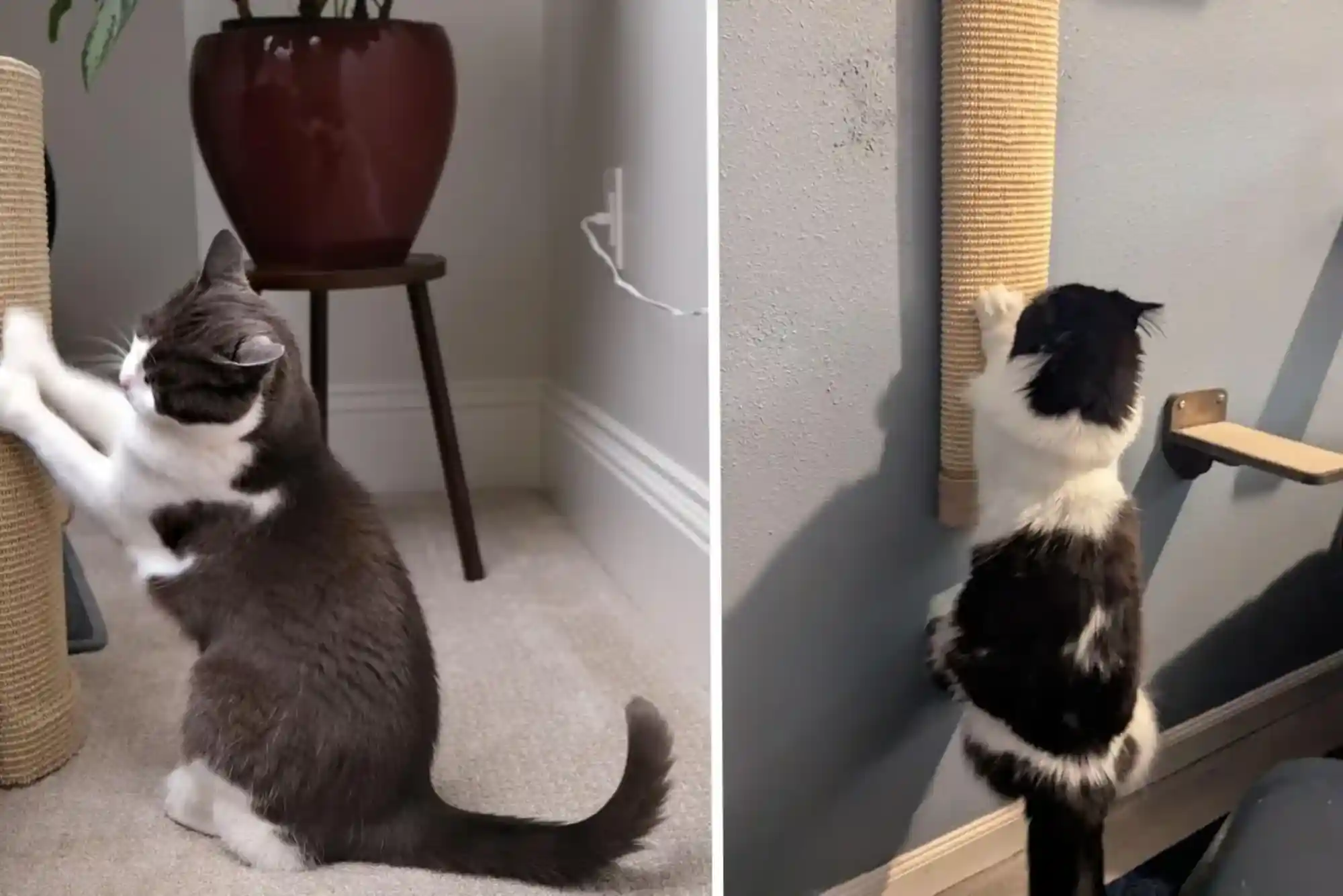
Watch a cat use a tall scratching post and you will notice that scratching is more than a paw movement. The cat extends its front legs, shoulders, back and sometimes its entire body. A properly positioned scratching post therefore doubles as a stretching station.

It leaves a visual and scent message
Cats have scent glands around their paws. Scratching can leave both visible marks and scent information that communicates territorial presence. This is one reason cats may repeatedly scratch prominent objects in the home.
It can relieve excitement or tension
Some cats scratch when they are excited, particularly after waking, playing or seeing another animal. Others may scratch when they feel stressed. Redirecting this behaviour is more effective than trying to eliminate scratching altogether.
Choose the Right Scratching Post
One of the most important steps in learning how to stop cats from scratching furniture is choosing a scratching post that your cat actually wants to use.
Height matters
For cats that scratch vertically, the post should be tall enough for a full-body stretch. A short post may force the cat to crouch, making it less satisfying than a sofa arm or curtain.
A tall, sturdy post is usually preferable for adult cats. If your cat regularly stretches against furniture before scratching, that is a strong clue that a vertical scratching surface may be the best choice.
Stability is essential
A scratching post that wobbles, tips over or slides across the floor can quickly lose its appeal. Cats generally prefer an object that feels secure while they pull against it.
Choose a heavy base or secure the post so it remains stable during vigorous scratching. Stability is especially important for larger or energetic cats.
Texture influences preference
Cats can develop strong preferences for particular scratching surfaces. Sisal rope is popular because it provides resistance and a satisfying texture, while some cats prefer cardboard, carpet or untreated wood.
If your cat ignores one material, that does not necessarily mean it dislikes scratching posts altogether. It may simply prefer a different surface.
Where Should You Put a Scratching Post?
Placement is one of the biggest factors in learning how to stop cats from scratching furniture. The best scratching post is not useful if it is positioned somewhere your cat rarely visits.
Place it near existing scratching targets
If your cat scratches the sofa, place the scratching post beside the sofa rather than across the room. Once the cat consistently uses the post, you can gradually move it to a more convenient location if necessary.
The same principle applies to other furniture. A scratching post should initially be positioned where the unwanted behaviour is already happening.
Put a post near sleeping areas
Many cats like to stretch and scratch shortly after waking. Placing a scratching post near a favourite sleeping area can capture this natural routine.
A cat tree with an integrated scratching surface can work particularly well because it combines resting, climbing and scratching in one area.
Consider high-traffic areas
Cats often scratch in areas where people and other pets spend time. A scratching post hidden in a quiet storage room may be less attractive than one located in the living area.
Your cat may actually prefer a scratching post that allows it to participate in household activity while scratching.
How to Stop Cats from Scratching Furniture with Better Setup
Once you understand your cat’s preferences, the next step is to make the alternative more attractive than the furniture.
Match the direction of scratching
Pay attention to how your cat scratches. If it stands upright and scratches the side of the sofa, provide a vertical scratching post. If it scratches rugs or carpets, try a horizontal or angled scratcher.
Matching the setup to the existing behaviour reduces the amount of retraining required.
Use more than one scratching surface
There is no rule that says a household should have only one scratching post. Multiple scratching areas can be especially helpful in larger homes or households with several cats.
Place different scratchers in locations where your cat naturally spends time. You can also offer different textures and orientations to discover which combination your cat prefers.
Make the furniture less rewarding
While introducing scratching alternatives, make unwanted furniture less appealing. Temporary furniture covers, protective materials or rearranging the surrounding area can reduce access to favourite scratching spots.
The goal is not to frighten the cat. Instead, you are making the appropriate scratching surface easier and more rewarding to use.
How to Encourage a Cat to Use a Scratching Post
Buying a scratching post is only the first step. Some cats need encouragement before they decide that the new object belongs in their routine.
Use play to introduce the post
Interactive play can naturally draw your cat towards the scratching surface. Move a wand toy around the post or allow your cat to chase a toy that passes over its surface.
Avoid physically forcing your cat’s paws onto the scratcher. This can create a negative association with the object.
Reward desirable behaviour
When your cat voluntarily scratches the post, reinforce the behaviour with praise, affection or a suitable treat if your cat enjoys food rewards.
Timing matters. Rewarding the behaviour immediately helps your cat connect the scratching post with positive consequences.
Make the post interesting
Some cats become interested in new objects naturally, while others need additional encouragement. Catnip can attract some cats to certain scratching surfaces, although not every cat responds to it.
You can also experiment with toys and positioning rather than relying on a single attraction method.
What Not to Do When a Cat Scratches Furniture
Understanding what not to do is just as important as knowing how to stop cats from scratching furniture.
Do not punish your cat
Shouting, hitting or frightening a cat does not teach it where scratching is acceptable. It may instead create fear and damage your relationship with the animal.
If you catch your cat scratching furniture, calmly redirect its attention towards an appropriate scratching surface.
Do not remove every scratching opportunity
Trying to eliminate scratching completely is unrealistic because scratching is normal feline behaviour. Your goal should be to redirect it.
Providing appropriate outlets allows your cat to perform a natural behaviour without destroying household furnishings.
Do not buy an unstable post
An inexpensive scratching post that constantly falls over may be worse than having no post at all. Cats learn quickly when an object feels unsafe or uncomfortable.
Invest in a stable design and inspect it regularly for damage.
How Long Does It Take to Stop Furniture Scratching?
There is no universal timeline. Some cats begin using a new scratching post immediately, while others need several days or weeks of consistent encouragement.
Age, personality, previous habits and the attractiveness of the furniture can all affect the process.
Consistency is more important than speed. Keep the scratching post accessible, reward appropriate use and avoid reinforcing unwanted scratching by giving the behaviour attention.
If your cat has been scratching the same piece of furniture for years, expect the change to take longer than it would with a newly adopted kitten.
Maintaining Your Cat’s Scratching Post
A scratching post can become less attractive as it becomes worn, dirty or unstable. Regular maintenance therefore matters.
Inspect the surface periodically and replace damaged sections when necessary. Some cats actually prefer well-used scratchers because the worn texture provides a satisfying scratching experience.
If a cardboard scratcher becomes heavily shredded, replace it when it is no longer safe or practical. For rope-covered posts, make sure loose strands do not create a hazard.
You should also keep the post firmly anchored. If the base begins wobbling, repair or replace it promptly.
When Scratching Could Indicate a Bigger Problem
Normal scratching is usually nothing to worry about. However, a sudden and dramatic increase in scratching may deserve closer attention.
Changes in the household, new animals, unfamiliar visitors, moving furniture or other environmental disruptions can increase stress-related behaviours. If scratching appears alongside hiding, aggression, changes in appetite, excessive vocalisation or other unusual behaviour, consider discussing the changes with a veterinarian or qualified feline behaviour professional.
The objective is not simply to protect your furniture. It is to make sure your cat’s physical and emotional needs are being met.
A Practical Scratching Post Setup for Your Home
A good setup begins with observation. Watch where, when and how your cat currently scratches. This tells you more than choosing a scratching post based purely on appearance.
If your cat scratches vertically, provide a tall, stable surface. If it prefers floors and carpets, introduce a horizontal scratcher. If it scratches immediately after sleeping, position a scratcher nearby. If it targets the sofa, start the new post beside the sofa.
Over time, you can create a small scratching zone containing different surfaces and orientations. This gives your cat choice while protecting the areas of your home that matter most.
The most effective setup is one that fits naturally into your cat’s daily routine.
FAQs
How do I stop my cat from scratching my furniture?
Provide an appealing scratching post close to the furniture your cat targets. Choose a stable surface that matches your cat’s preferred scratching direction and texture. Reward your cat when it uses the post and temporarily make the furniture less accessible.
What smell do cats hate to stop scratching furniture?
Strong scents are sometimes suggested as deterrents, but using smells to repel a cat is not usually the best long-term solution. A better approach is to provide an attractive alternative and redirect the behaviour. Avoid applying substances that could be irritating or toxic to cats.
Why won’t my cat use the scratching post?
The post may be too short, unstable, poorly positioned or covered in a texture your cat dislikes. Try moving it closer to the cat’s preferred scratching location and experiment with vertical, horizontal and different textured options.
How do I get my cat to use a scratching post instead of the couch?
Place the scratching post directly beside the couch where your cat normally scratches. Encourage interaction through play and reward voluntary use. Once the behaviour becomes consistent, gradually move the post if you want it in another location.
Should I spray my cat with water when it scratches furniture?
Spraying water is generally not recommended as a training method. It can make your cat wary of you without teaching it what behaviour you want instead. Redirecting the cat towards an appropriate scratching surface is a more constructive approach.
Do cats need a scratching post if they are indoor cats?
Yes. Indoor cats still have natural scratching needs. A suitable scratching surface gives them an outlet for claw maintenance, stretching, marking and normal behaviour.
Knowing how to stop cats from scratching furniture is less about stopping scratching and more about giving your cat a better place to do it. The right scratching post should be stable, appropriately sized and matched to your cat’s preferred texture and scratching direction. Placement matters just as much: put the post where your cat already wants to scratch, stretch or spend time.
Related Reading: How to Prevent and Treat Hairballs in Indoor Cats