Introduction
Guest posting is an effective way to build relationships, publish valuable content, and strengthen a website’s backlink profile. However, managing multiple pitches can become challenging without a consistent tracking process. Emails get buried, editors miss follow-ups, and approved articles sometimes remain unpublished for weeks.
Learning how to track guest-post submissions from pitch to publication helps SEO professionals maintain control over every opportunity. A structured workflow makes it easier to monitor communication, manage deadlines, identify delays, and measure campaign performance.
Whether you manage guest posts independently or coordinate a larger outreach campaign, an organized tracking system can save time and reduce unnecessary mistakes. More importantly, it helps ensure that promising opportunities progress from the initial pitch to a published article.
Why Tracking Guest-Post Submissions Matters
Guest posting involves several stages, including prospect research, pitching, editorial communication, content preparation, revisions, and publication. Each stage requires attention, and overlooking one can delay the entire process.
A reliable tracking system provides a clear picture of every active opportunity. Instead of searching through old emails, you can quickly identify which editors need responses and which articles require revisions.
Tracking also helps you recognize patterns in your outreach performance. For example, you might discover that personalized pitches receive more responses than generic messages. You may also notice that certain publishers have longer editorial timelines.

These insights support better decisions and help you allocate resources more effectively.
How to Track Guest-Post Submissions from Pitch to Publication
The most practical approach is to create a centralized record for every guest-post opportunity. This record should capture the publisher’s details, outreach history, content requirements, deadlines, and final publication information.
Create a Centralized Tracking System
Start with a spreadsheet, project management tool, or customer relationship management platform. Choose a system that suits your campaign size and working style.
A spreadsheet is often sufficient for freelancers and small SEO teams. Larger campaigns may benefit from project management software with automated reminders and team assignments.
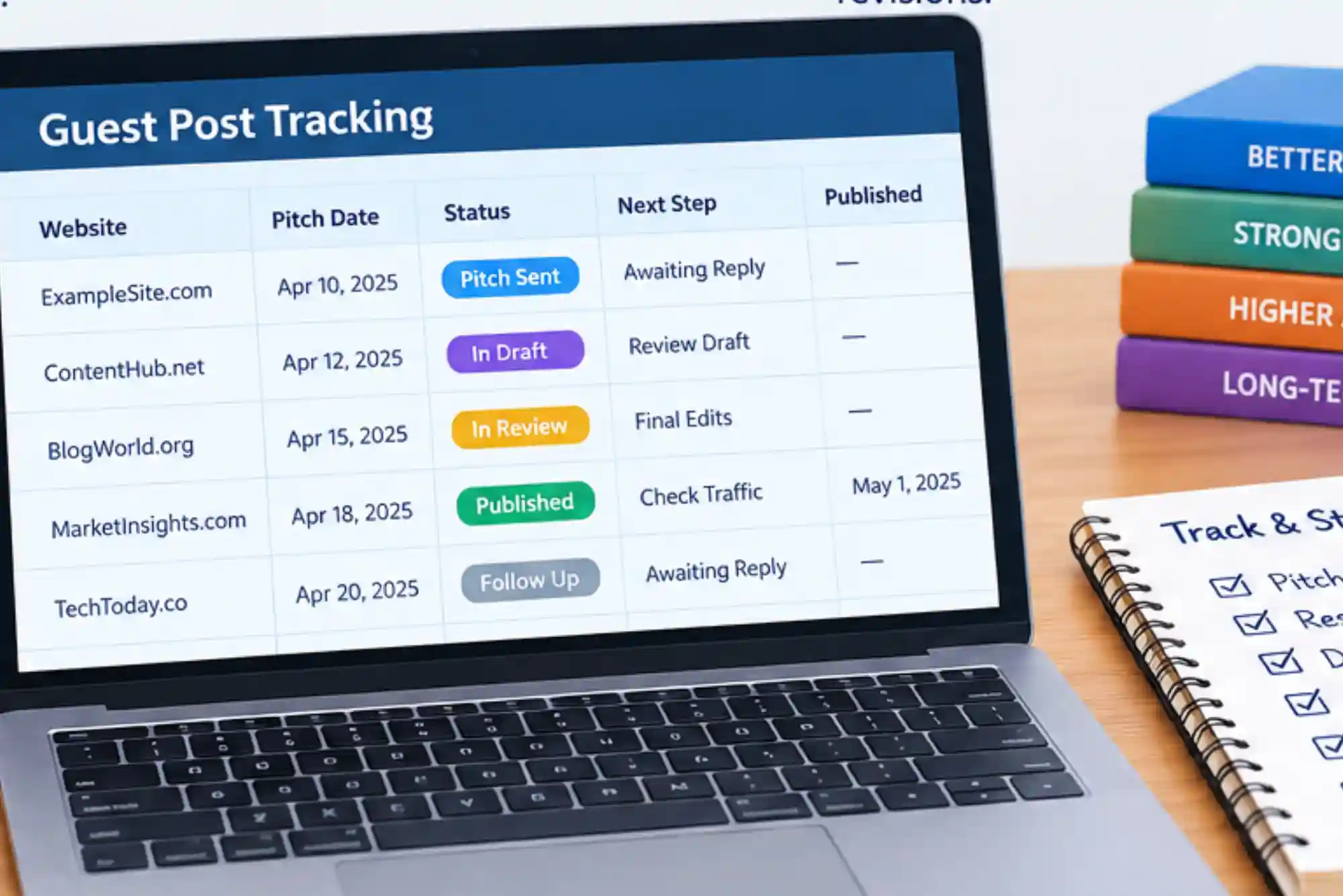
Record each publisher separately and assign every opportunity a unique reference or clearly identifiable title. Include the website URL, editor’s contact information, target topic, pitch date, and current status.
Keep communication notes within the same record whenever possible. This prevents important details from becoming scattered across email conversations and documents.
Most importantly, update the tracker whenever an opportunity changes status. An accurate record is more valuable than a complicated system that nobody maintains.
Establish Clear Submission Stages
Every guest-post opportunity should move through clearly defined stages. These stages make progress measurable and prevent confusion between pitches, approved topics, and published articles.
Begin with prospect identified, then move to pitch prepared and pitch sent. After submission, track responses such as awaiting reply, follow-up required, accepted, rejected, or topic revision requested.
Once an editor accepts the pitch, create additional stages for content in progress, submitted for review, revisions requested, approved, scheduled, and published.
You can also include a closed or inactive status for opportunities that are no longer progressing.
Define each stage clearly so everyone on your team understands when a record should move forward. For instance, an editor expressing interest does not necessarily mean the article has been formally accepted.
Record Pitch Dates and Follow-Up Deadlines
Timing plays an important role in successful outreach. Without recorded dates, it becomes difficult to determine when a follow-up is appropriate.
Log the date of every initial pitch and subsequent message. Set a follow-up reminder based on the publisher’s stated response timeline or your established outreach policy.
If an editor requests a response within a specific period, record that deadline immediately. Otherwise, use a reasonable interval before sending a polite follow-up.
Avoid repeatedly contacting editors within short periods. Excessive messages can damage professional relationships and make your outreach appear careless.
Your tracker should show the last contact date, the next planned action, and the person responsible for taking it.
Managing Content After a Pitch Is Accepted
Pitch acceptance is an important milestone, but it does not guarantee publication. The article must still meet editorial expectations, follow submission guidelines, and pass the publisher’s review.
Track Writing and Editorial Deadlines
After receiving approval, record the agreed topic, article length, formatting requirements, preferred sources, and submission deadline.
Assign a writer and editor if multiple people are involved. Make sure each person understands their responsibilities and has access to the latest content brief.
Monitor the article’s progress throughout production. If research or writing takes longer than expected, update the deadline and inform the relevant stakeholders.
This approach reduces last-minute pressure and gives editors a more dependable experience.
Monitor Revisions and Approval
Editors may request changes to the headline, structure, supporting evidence, tone, or links. Record every revision request and its corresponding deadline.
Keep a version history or use a shared document to prevent confusion between outdated and approved drafts. Once changes are complete, mark the article as resubmitted and record the new submission date.
Do not mark an article as approved until the editor confirms acceptance. This distinction keeps your reporting accurate and prevents premature publication forecasts.
Track Publication Dates and Live URLs
The final stage begins when the publisher confirms that the article is live. At this point, update the record with the publication date and the exact article URL.
Visit the page to verify that it loads correctly and displays the intended content. Check the headline, author attribution, formatting, and relevant links.
Confirm that your contextual link appears naturally and points to the correct destination. Also inspect the published page for obvious formatting problems or missing sections.
Record whether the link is followed or marked with attributes such as nofollow or sponsored, when this information is relevant and visible. Do not assume every guest-post link passes ranking signals.
A live URL should remain in your records even after the campaign ends. Publishers can update, redirect, or remove pages, so periodic checks may be worthwhile for important placements.
Measure Guest-Post Campaign Performance
Tracking submissions becomes more useful when it also reveals campaign performance. Rather than measuring success by the number of pitches sent, evaluate the entire process.
Review how many pitches receive responses, how many opportunities become accepted articles, and how many accepted drafts reach publication.
You can also measure the average time between pitching and receiving a response. Tracking the time from acceptance to publication helps identify publishers with particularly long editorial cycles.
Consider the relevance and quality of each placement as well. A publication on a relevant, trustworthy website may provide more value than several placements on unrelated websites.
For broader campaigns, connect submission records with your SEO reporting process. This makes it easier to assess referral traffic, relevant audience engagement, and changes in organic search performance without assuming every improvement comes directly from one backlink.
Common Guest-Post Tracking Mistakes to Avoid
One frequent mistake is maintaining separate, inconsistent spreadsheets for pitching and content production. This creates duplicate records and makes it difficult to understand an opportunity’s complete history.
Another problem is failing to record follow-up dates. Without reminders, valuable conversations may disappear from view.
Some teams also confuse editorial acceptance with publication. Keeping these statuses separate produces more reliable reports and realistic forecasts.
Finally, avoid measuring success exclusively through backlink counts. Editorial relevance, publisher credibility, audience fit, and content quality should also influence your evaluation.
A simple, consistently updated tracking system usually performs better than an elaborate process that requires too much administration.
How Guest-Post Services and Backlink Packages Fit Into the Process
Managing outreach internally can be time-consuming, particularly when campaigns involve many publishers and strict content deadlines. A professional workflow can help businesses coordinate research, communication, content creation, and placement verification.
If you need support with outreach and publisher placements, explore our guest posting service. A suitable service can help streamline campaign execution while allowing you to maintain clear records of progress and deliverables.
For businesses managing broader link-building campaigns, a backlink package may also fit into their SEO strategy. Before selecting a package, review its deliverables, publisher relevance, content standards, reporting practices, and link policies.
Regardless of whether you manage outreach yourself or work with an external provider, maintain access to clear reporting. Your records should show which opportunities were pursued, which placements were delivered, and where the published articles can be found.
Frequently Asked Questions
How do you track guest-post submissions effectively?
Use a centralized spreadsheet or project management tool to record publisher details, pitch dates, follow-up deadlines, editorial status, content deadlines, and live URLs. Update each record whenever an opportunity progresses.
How long should you wait before following up on a guest-post pitch?
The appropriate interval depends on the publisher’s stated guidelines and expected response time. If no timeline is provided, waiting approximately five to seven business days before sending a polite follow-up is a reasonable starting point.
What information should a guest-post tracking spreadsheet include?
Include the publisher’s name, website URL, editor contact, proposed topic, pitch date, current status, follow-up date, article deadline, revision notes, publication date, and live URL. Add campaign-specific fields when necessary.
How do you know whether a guest post has been published?
Open the confirmed article URL and verify that the page loads successfully. Check the published content, attribution, and intended links. Record the publication date and revisit important placements periodically.
Which tools are best for tracking guest-post submissions?
Google Sheets and Microsoft Excel work well for straightforward campaigns. Project management platforms can provide task assignments, deadline reminders, and collaboration features. The best option is one your team can update consistently.
How can you measure guest-post outreach success?
Measure response rates, acceptance rates, publication rates, and average turnaround times. Evaluate the relevance and quality of published websites alongside referral traffic and other meaningful SEO indicators.
In today’s fast-paced digital world, staying informed about the latest trends, useful insights, and everyday topics can help readers make better decisions. MyDigest.ae offers an opportunity to explore engaging content, discover fresh perspectives, and stay updated on subjects that matter. Whether you are looking for informative articles or general knowledge, finding reliable online resources makes learning easier and more convenient for modern readers.
Conclusion
Understanding how to track guest-post submissions from pitch to publication helps transform outreach into a manageable, measurable process. A centralized tracker, clearly defined stages, consistent follow-ups, and verified publication records keep campaigns organized.